Protect Your Kitchen from Grease Fire Risk
Commercial kitchen fire suppression system installation for restaurants, food trucks, and institutional kitchens in Palestine, Texas.
Grease fires in commercial kitchens spread faster than most other fire types, fueled by oil in hoods, ducts, and on cooking surfaces that can ignite within seconds of overheating. A stove fire that starts in a Palestine restaurant kitchen can quickly involve the entire hood system, damaging equipment and forcing closures that last weeks or longer. Fire suppression systems designed for commercial cooking environments release chemical agents directly over appliances and inside ductwork, cutting off oxygen and cooling grease before flames spread beyond the cook line. Without these systems installed and properly configured, even a small flare-up can become a total loss.
Lone Star Fire Suppression LLC installs commercial kitchen fire suppression systems that protect hoods, ducts, appliances, and cooking areas from grease fires. Systems are designed to meet local fire codes and the specific layout of your kitchen, whether you operate a full-service restaurant, a food truck, or an institutional kitchen in Palestine. Licensed and insured professionals with extensive experience working in kitchens throughout the area perform clean, efficient installations with clear timelines and upfront pricing. You receive a system that integrates with gas shutoff valves and ventilation controls, ensuring that when suppression activates, fuel sources stop and fans shut down to prevent fire spread.
Schedule a consultation in Palestine to protect your kitchen and meet fire code requirements before your next inspection.
What Gets Installed and How It Works
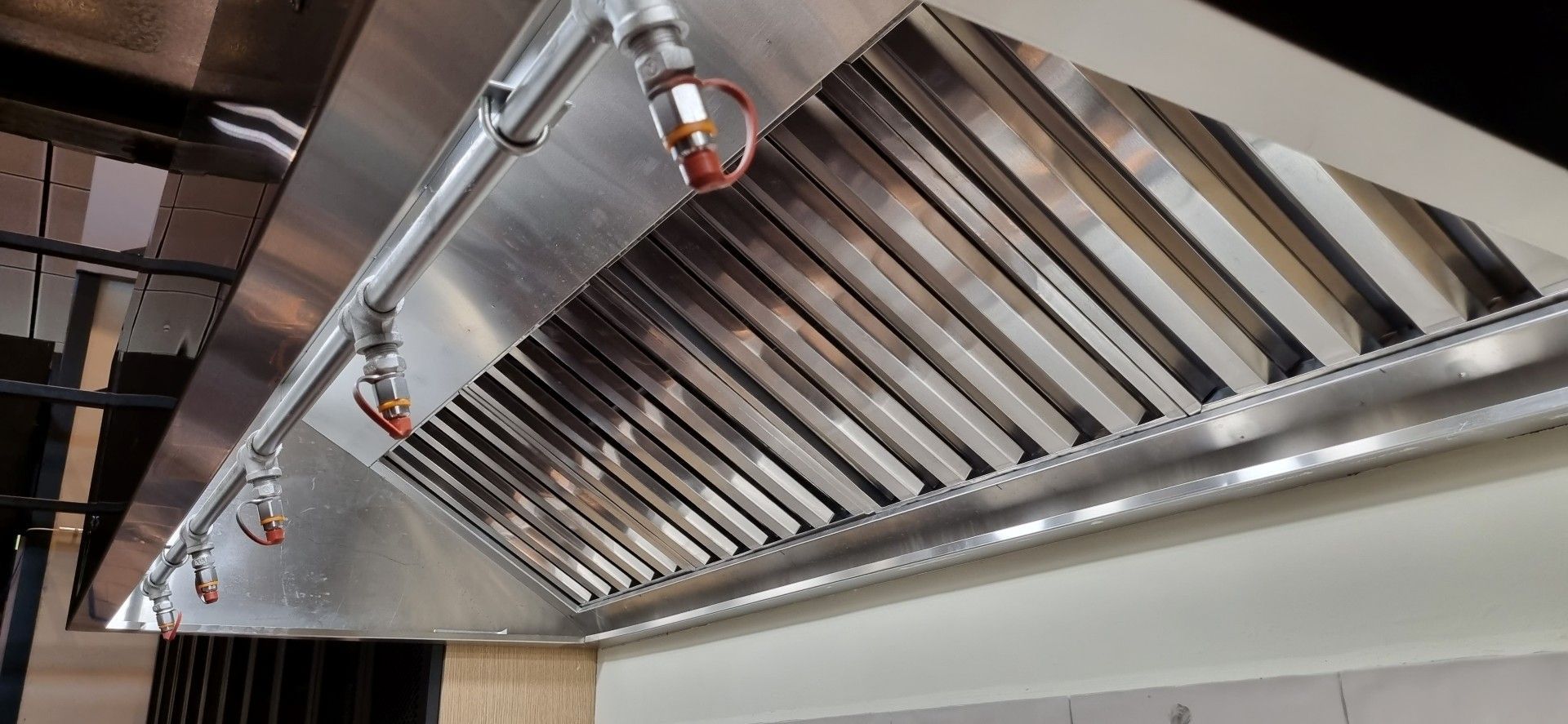
Installation begins with a site visit to measure your hood, map appliance locations, and identify duct runs that will require nozzle coverage. Technicians mount a control panel near the cook line, run piping from a chemical tank to discharge nozzles positioned above fryers, griddles, and ranges, and connect the system to gas shutoff valves and hood fan controls. Manual pull stations are installed at accessible exit points so staff can activate the system if automatic detection fails, and all components are anchored securely to withstand the heat and vibration common in busy Palestine kitchens.
After installation, you will see nozzles aimed directly at cooking surfaces, labeled pull stations near doorways, and a clearly marked control panel that shows system status. When the system detects high heat or flames, it releases a wet chemical agent that blankets the fire and prevents reignition. Gas lines shut off automatically, and hood fans stop pulling air, which keeps flames from spreading into ductwork. The system resets after inspection and recharge, allowing kitchen operations to resume once the area is cleared and equipment is checked for damage.
Installations include all required nozzles, piping, control panels, and integration with existing gas and electrical systems. The work does not include hood cleaning, duct repairs, or modifications to ventilation equipment unless those are arranged separately. If your kitchen layout changes after installation, such as adding a new fryer or moving a range, the system must be reconfigured to maintain full coverage and code compliance, which can be scheduled as a follow-up service.
This Is Easier to Understand Than You Think
Restaurant owners and kitchen managers often want to know how long installation takes, what happens during activation, and whether existing equipment needs modification before the system goes in.
Lone Star Fire Suppression LLC provides installations across Palestine and surrounding East Texas communities with clear communication and reliable project management. Contact us today to schedule a consultation and get your kitchen protected with a system built for your space.